function my_custom_js() { echo ''; } add_action( 'wp_head', 'my_custom_js' );
Yearly Archives

2021

Arizona State University team visits the CMU to discuss possible collaboration

By | CMU News
A two-member team from Arizona State University in the United States visited the CMU on Monday, November 15, 2021, for about two hours to discuss possible collaboration between the ASU and the CMU. The visit is part of work being done by the CMU Office of Digital Transformation in collaboration with several CMU units such as the Faculty of Engineering, the Centre for Security, Counter-Terrorism and Non-Proliferation, CSCTN, and the Centre for Digital Innovation and Advanced Manufacturing, CDIAM.
The ASU is rated number one in the United States in terms of innovation and the team came to discuss ways in which the two universities could possibly collaborate on digital innovation and cyber security projects.

CMU APPOINTS NEW EXECUTIVES AS RE-ORGANISATION CONTINUES

By | Uncategorized

As the Caribbean Maritime University continues to re-organise its operations, the University Council has appointed five new Vice Presidents after a rigourous selection process.

According to Council Chairman, Professor Shirley, “these vice presidents will finalize the Executive team, complementing the Interim President Professor Evan Duggan and the University Treasurer Ms. Joy Patricia Harrison who joined the CMU in June 2020”. “Their appointments are critical to the re-organisation of the CMU in line with the mandate given by the Prime Minister when the board was appointed in January 2020”.

The newly appointed Vice Presidents are Professor Ibrahim Ajagunna, Professor Noel Brown, Dr. Taneisha Ingleton, Dr. Jacqueline Leckie Johnson, and Dr. Eron McLean.

Professor Ibrahim Ajagunna previously served as Vice President of Academics & Student Affairs/Deputy to the President will serve as Vice President/Deputy to the President.

Professor Noel Brown, formerly Vice President of Technology and Innovation, has been appointed as Vice President of Academics.

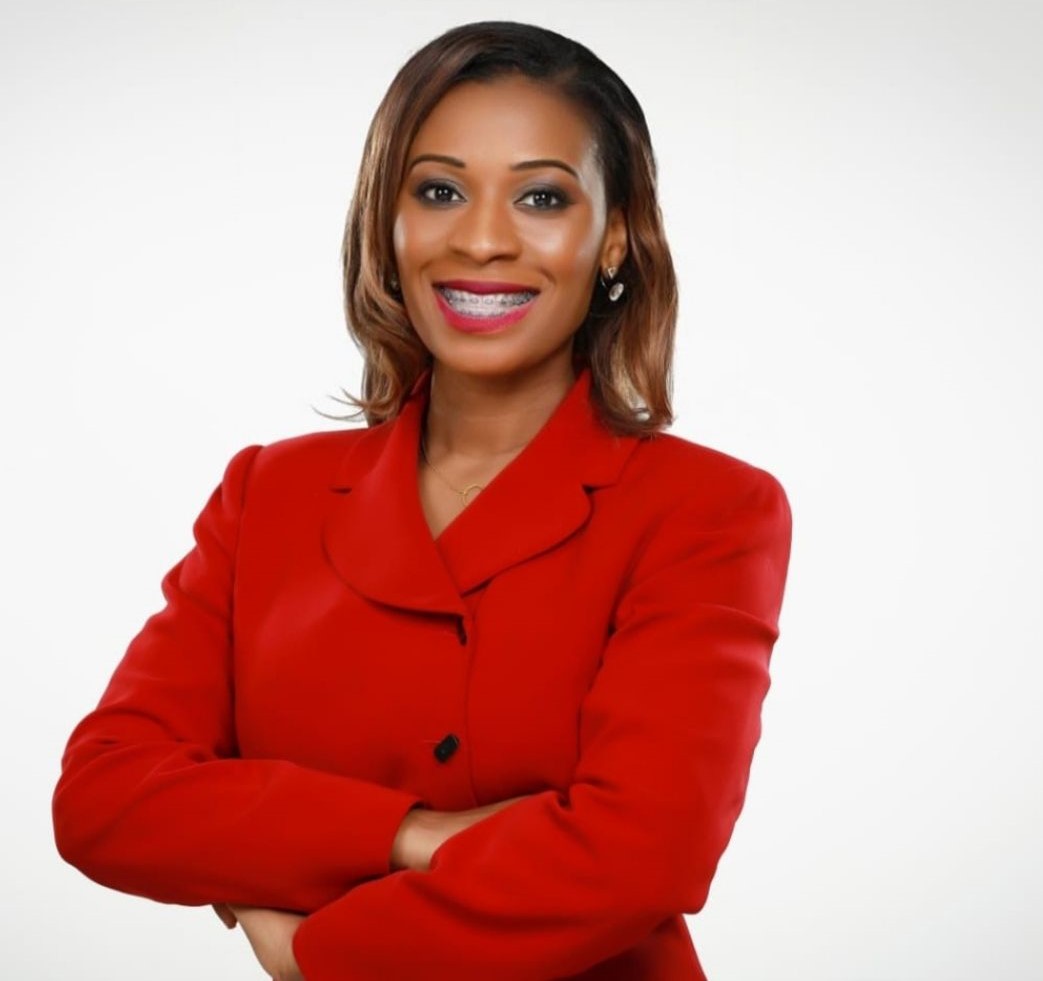
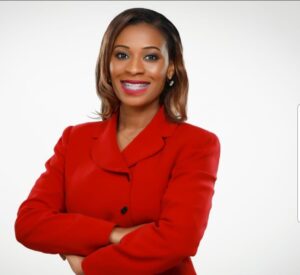
Dr. Taneisha Ingleton, Scholar-practitioner, author and educator joins the CMU as Vice President of Administration/ effective September 6, 2021.  She will have responsibility for Human Resources, Student Administration/Services, Legal Services, Marketing and Communications, Security, General Services and the Secretariat. In that role, she will be in charge of all University functions.

Dr. Jacqueline Leckie Johnson joins the CMU as Vice President in charge of Digital Transformation.  She has extensive experience in the private as well as non-profit sectors having served several organisations as an Information Technology and Business Process consultant, General Manager, Chief Financial Officer, and Chief Internal Auditor, among other roles.

Dr. Eron McLean has been appointed as Vice President in charge of Planning and Development.  He previously served as the Vice President in charge of the Office of University Advancement and Development at the CMU.

According to Interim President, Professor Evan Duggan, “these are critical appointments as the CMU’s re-organisation and re-alignment continues, to complement the significant work that has already been completed in several key areas of the organization.”


More on the Vice Presidents

Professor Ibrahim Ajagunna

Professor Ajagunna holds a Higher National Diploma from the Federal Polytechnic Idah, Nigeria; a Master of Science degree from Sheffield Hallam University, UK; a Post Graduate Diploma in Education from the University of Technology, Jamaica and a Doctor of Philosophy in Sustainable Development from the University of the West Indies, Jamaica.  Since joining the CMU, in 2008, he has helped to transform the academic landscape of the institution from a mere five associate degree programmes to over twenty-three undergraduate and five postgraduate degree programmes.

Professor Noel Brown

Professor Brown graduated from the Kiev National Aviation University – formerly Kiev Institute of Civil Aviation Engineers (KIIGA) – in 1993, with a Master of Science Degree in Aeronautical Engineering and a Diploma in Education. He won a FULBRIGHT LASPAU Fellowship to pursue a PhD Degree at the University of Oklahoma in 1999. There, he earned a second Master of Science Degree and a Doctor of Philosophy Degree in Mechanical Engineering.  He has authored, co-authored, and published over 30 peer-reviewed journal and conference papers in his areas of expertise, which include heat and mass transfer, fluid flow, energy storage, renewable energy, electrohydrodynamic, cooling of electronic components in the aircraft industry and environmental sustainability.

Dr. Taneisha Ingleton

Dr Taneisha Ingleton holds the LLB degree from the University of London; a PhD from the University of Saskatchewan in Canada; a Master of Philosophy with distinction; a Post Graduate Diploma in Education with distinction; and the Bachelor of Arts with First Class Honours from the University of the West Indies. She has served the Ministry of Education, Youth and Information for seven years; four of those years as Director/Principal for the National College for Educational Leadership (NCEL). She  Her dissertation research and scholarly writing have been focused on transformational leadership and leadership development her and she has published papers on leadership development, language and culture. she has also travelled extensively for consulting engagements, conference presentations and as a keynote speaker at scholarly events.


Dr. Jacqueline Leckie Johnson


Dr. Leckie Johnson holds a Ph.D. in Business Administration (with High Commendations) from the Mona School of Business at the University of the West Indies, Mona; the MSc degree in Computer-Based Management Systems (with Distinction) and a Bachelor of Science degree in Accounting (with Honours).

She has a track record of successfully implementing information technology and process improvements in a variety of business entities in the private and public sectors as well as in the non-profit arena.  She has previously served as an Information Technology (IT) and Business Process Consultant at the Caribbean Maritime University, spearheading the implementation of the Accounting and Procurement modules of the Enterprise Resource System (ERP), which has greatly assisted in modernizing the IT capability of key departments of the CMU.  In previous roles during her career, Dr. Leckie Johnson served as Chief Financial Officer, Chief Internal Auditor, and General Manager within two household group of companies operating in the retail, distribution, manufacturing and financial services sectors.


 Dr. Eron McLean

Dr. McLean holds a Doctor of Education in Adult Education from Walden University, the MBA degree from the University of New Orleans and a Bachelor of the Arts from the University of the West Indies. He is a trained teacher having obtained a Diploma in Teaching English & History from Church Teachers’ College.

Dr. McLean previously served as the Vice President of University Advancement and Development at the CMU.   In that role, he provided progressive leadership in strategic planning and the implementation of objectives for the University campuses. He was responsible for executive oversight of the properties and facilities, plans and service quality.


“There’s a smaller window for error”: Captain Andre Smith shares risks facing marine industry

By | Uncategorized

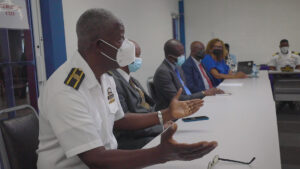
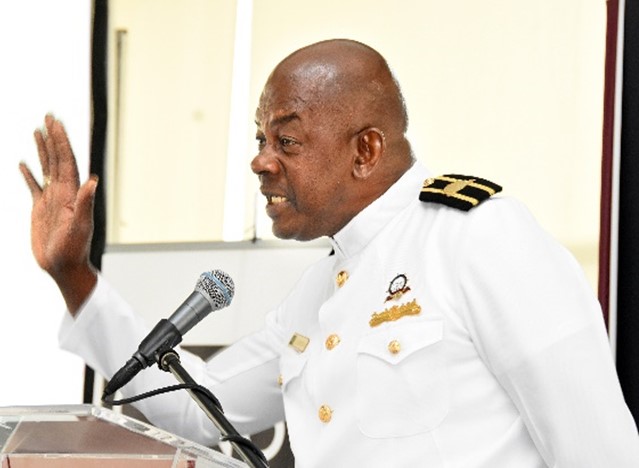
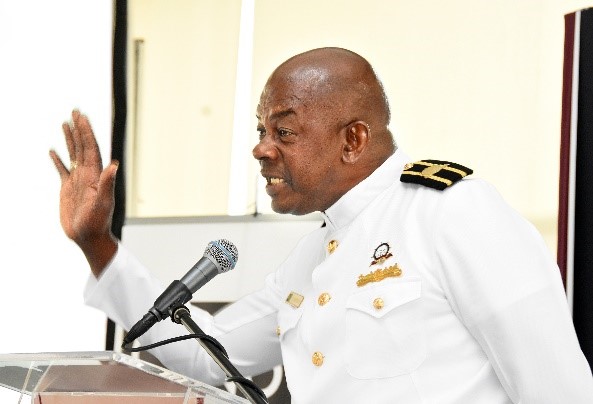
Being part any industry for over four decades would give anyone substantial insight into its operations, developments, and challenges. It is with this unique perspective that Captain Andre Smith has brought to the Port Authority of Jamaica (PAJ) where he serves as a senior marine pilot.

Captain Smith began his journey in the maritime industry as a cadet in 1980 before working his way up to being captain of his first vessel a decade later. He described that initial voyage where he held command of a vessel from Mobile, Alabama in the United States of America to Port Esquivel in Jamaica as filled with nerves but “exciting”.

Back then, things were somewhat simpler as the demands of international commerce were not at today’s increasingly frenzied pace, which has brought its own difficulties.

“The day-to-day challenges that the [local] marine pilot face is the same challenge that all pilots around the world face; the vessels are getting much bigger [but] the ports are not getting any bigger,” Smith.

“It’s the same size ports that we are squeezing these bigger and bigger vessels in. Every time a bigger vessel comes, there’s a smaller window for error in doing these manoeuvres. So we have to be extremely careful bringing these ships in.”

Stressing the role of the marine pilot in carefully guiding vessels, Smith said “Safety is our biggest regard; that overrides everything. We don’t consider commercial pressure when it comes to safety because that is our job and that is what we are paid to do – to make sure that everything is safe, we don’t have any accidents, we don’t have any oil spills, anything like that. That is what we do first and foremost.”

Despite the significance of the role, the Caribbean Maritime Institute and Warsash Maritime College alumnus said mariners are often overlooked.

“The Jamaican seafarers don’t get vast recognition. I think the only time anybody heard or cared anything about seafarers is when the pandemic started and we had to repatriate some of the persons that were working on cruise ships,” he said.

Despite the challenges faced, including the inability to leave ships and be repatriated home when their contracts ended, seafarers continued to work “to keep the lines of commerce open because the world trade is pinned or pivots on maritime trade. We are the silent underpin to the whole world trade and a lot of people don’t realise that and take a lot of things for granted.”

With the International Maritime Organization recognising Day of the Seafarer, and the need for their ‘fair futures’ on June 25, Smith shared his thoughts on what that means.

“A fair future is one in which they are adequately compensated for the work that they have done and are not mistreated, as they have been in some instances, by not getting wages and not being able to go home when their contracts are up.” Further, he said while the dwelling conditions aboard most ships have improved, many are still “less than ideal for long-term living”.

Locally, Smith said the continued education and training of seafarers is urgently needed to ensure safe operations within the developing industry.

“I would love to see a more comprehensive programme of training because these ships are getting much bigger and the ports are remaining at the same size so we need to do more in terms of keeping pilots current with the activities that are happening internationally and to make sure that when these ships come, they don’t come as a surprise to us and we are struggling to keep up with them.

“We would have already been fully trained, done all the simulators and we have gone onboard live model ships to train. What I would love to see is the more fulsome co-operation with some of these shipping companies when it comes to developing training programmes. I would love to see more work being done in coordinating training for all the pilots; a few of us have already done some preliminary work but that is far too few, we need to do some more.”


Theory and Practical in One – MSc Security Studies

By | Uncategorized

Based on the developments taking place on the world stage and in the international system, the students participating in the MSc. Security Studies programme at the Caribbean Maritime University (CMU) have been exposed to both the theory and practical components of these developments, making them more rounded in their field of study. Happening almost simultaneously, they would have witnessed a global pandemic (COVID-19) and the international responses by nations.

The US elections and the events of January 6, 2021, – race relations in the US and how it has manifested into hate crimes, the death of George Floyd and the vociferous call for policing reforms are issues and possibilities which were assessed during the programme. The students would have seen a shift in US foreign policy from Donald Trump’s realist pulpit “America First and America Alone” to Biden’s Liberalist approach of “America is back, Multi Literalism is back”. They are presently witnessing the G7 Summit to be followed by the NATO Summit. They would have also noticed the shift in terrorism threat from the international level to the domestic level and finally, the threat of cybercrime and how cyber-criminals are using ransomware to extort large enterprises, especially those located in the United States of America. The list is not exhaustive, but these issues readily come to mind.

Mr Owen Ellington and I, along with the other lecturers, would have taught all these areas and possibilities in our lectures, which would have incorporated the theoretical aspect of the teaching and learning experience. On the other hand, the antagonism in the international system and human behaviour would have addressed the practical side in reality.

I don’t believe that another group will be so fortunate to receive the theoretical knowledge and have that information unfold so quickly with developments globally, thus creating a realistic and practical experience for them.

We encourage our students to continue to engage in environmental scanning as they seek to apply their knowledge in this volatile, uncertain, complex and ambiguous world.

Let us not forget that knowledge gained is of no value if it is not shared.


Author: Assan Thompson, Retired Assistant Commissioner of Police, JCF                

Head of Department,  Centre for Security, Counter terrorism and Non-Proliferation (CSCTN)                

Caribbean Maritime University

CMU a key partner in a regional port development initiative

By | CMU News, Uncategorized

June 1, 2021 (Kingston, JA) – The Caribbean Maritime University today announces that it will be a part of the INTERAMERICAS GATE project, a collaborative Caribbean partnership to develop better tools to aggregate and visualize key maritime port economic and environmental data. Led by the Antilles-Guiana Interport Coordination Council (CCIAG), the INTERAMERICAS GATE is a multi-partner project between the Grand Port Maritime of Guiana, the Grand Port Maritime of Guadeloupe, the Grand Port Maritime of Martinique, the Galisbay Port of Saint-Martin and the Caribbean Maritime University through our Centre for Digital Innovation and Advanced Manufacturing (CMU-CDIAM).
The project is funded by the INTERREG Caribbean, a European Territorial Co-operation programme that allows operators in Guadeloupe, Guiana, Martinique and Saint-Martin to implement win-win projects with their neighbors in the Caribbean. The INTERREG operational programme makes it possible to finance numerous cooperation projects between Caribbean territories. In this case from the Guaine Shield to the Caribbean, this project will use data as a bridge to understand more about key port economic data in the region. The INTERREG Caribbean funding made it possible to integrate the CMU-CDIAM in Jamaica as an extra-community partner.

The global maritime industry is strategic to economic development of nations especially in small island states like those in the Caribbean region. Data and information have now emerged as some of the most important assets that a country/region can develop. Tapping in to and sharing key port data across the region can make Caribbean ports more competitive drivers of regional growth and development. The CMU-CDIAM will lead the technical development of the web-based platform that will combine datasets from the 4 port partners with machine learning algorithms to help the regional port authorities get a better picture of the threats, opportunities, weaknesses, and strengths found in the consolidated port economic and environmental data.

“This project brings together the best of the CMU’s capabilities — our knowledge in the maritime sector and our expertise in digital transformation technologies,” said Erica Simmons, Executive Director, CMU-CDIAM, “We know the importance of data and information as the foundations of digital transformation, and we are committed to contributing the transformation of our Caribbean maritime sector.”

The collaborative 3-year project will begin with collecting data such as annual tonnage, annual TEUs, traffic and passengers from 4 ports but eventually be extended to include all Caribbean ports and more data points. For more information about the INTERAMERICAS GATE visit: https://www.interamericasgate-blog.fr/


The Real Fear of Terrorism – Major Public Safety Concern – Part 1

By | Uncategorized

Working in law enforcement for over forty years, has helped me to understand the view held by criminologists from across the world, that the fear of crime can be more serious and devastating than crime itself. I have seen in many communities where the effects of crime have generated so much fear and anxiety, to the extent where the lives of citizens have been disrupted beyond repair. The run for cover by hundreds of citizens in Times Square, New York on Tuesday, August 6, 2019, when popping sounds came from a motorcycle which was backfiring whilst it travelled along the roadway, is a classic example of how the fear of crime can affect the individual, community and country.  Those who were in that particular space and who rushed for cover could have caused a stampeded resulting in the injury or death of many or the destruction of property.

What were the people running from?

The people who scampered for cover were not running from the motor cycle itself, instead, they were running from what sounded like gunfire which has become too often the sound that has brought death, destruction and grief to the United States, which is classified as the world’s leading superpower. This superpower has not only prescribed security solutions for a number of developed and developing countries but have also intervened militarily in some countries to maintain law and order. Judging from the actions of the United States in helping other states with similar circumstances, one would imagine that they would possess both the will and capacity to deal effectively with this problem in their own country, to prevent further bloodshed. Unfortunately, that seems not to be the case.

The people were running away from the possibility of becoming a statistic from the many mass shootings which have taken place in the United States in recent times. Fresh in their minds were the two mass shootings which occurred hours apart, one in El Paso, Texas and the other in Dayton, Ohio which together claimed the lives of over thirty people and causing the injury of dozens. The gun continues to be the weapon of choice in the commission of these mass murder.

Mass shootings United States 2019

According to Gun Violence Archive (GVA) which is a non-profit corporation in the United States, and which is responsible to provide free online access to gun violence information; mass shootings topped the days of the year for 2019. As of August 5, 2019, which was the 217th day of the year, there were 255 mass shootings reported across the United States. The GVA defines mass shooting as any incident where at least four persons were shot, excluding the shooter.

The shooting at Dayton, Ohio, claimed nine (9) lives and injured twenty-seven (27) persons, whilst the shooting at Walmart in El Paso, Texas left twenty-two persons (22) dead and at least twenty-four (24) wounded. These are the two most recent mass shootings that have generated considerable fear, panic and anxiety among citizens and visitors within the United States. GVA has reported that before the mass shooting in El Paso, the deadliest mass shooting for 2019 happened in a Municipal building in Virginia Beach, where a former city employee killed twelve (12) persons and injured four (4).

For the period January 1 to August 5, 2019, GVA published the total number of mass shootings, injuries and deaths as follows:
Total shooting incidents = 33, 237
Total gun deaths = 8796
Total injuries = 17, 480

The last time mass shootings topped the days of the year according to GVA was 2016, which ended with 382 mass shootings. 2017 and 2018 recorded 346 and 340 mass shootings, respectively.

Call those shootings at Dayton, Ohio and El Paso, Texas by any other name, their motivation, modus, intent, objectives, and end state are consistent with terrorism criteria, notwithstanding the racial identity of the perpetrators.

Irony of the situation

The irony of the situation which makes it incomprehensible, is that whilst so many persons are being murdered by men who satisfy the terrorists criteria, the authorities have failed to designate these killers with the appropriate classification of “Terrorist”. The failure to designate them as terrorist, has hampered effective counter terrorism strategies to deal with the problem.

Strategies that would allow law enforcement to engage in activities such as wiretapping and financial investigations to identify terrorists financing and to deal with sponsors and facilitators of terrorism, may not be employed outside the terrorist designation. The internet which is a major source of radicalization of these killers will remain untouched once these perpetrators are not classified as terrorists, a designation which is readily given to international terrorists. Double standards have no place in the fight against terrorism, neither are euphemisms in crime classifications.

Terrorism criteria

In arriving at the terrorist classification there are a number of variables which must be weighed in the terrorism equation. Variables such psychology, sociology, motivation, intent, purpose, capability and end state. When these incidents in the United States are examined against international terrorism standard, they not only bear similarities with groups such as ISIS and Al Qaeda but they are equal in most respect. The only identifiable difference is that the perpetrators are from within their own country and are in receipt of support from misguided person, who are blinded by conditions of race, colour and politics. Nothing would be wrong if they were designated the status of domestic terrorists. Law enforcement would have a better hand to counter their activities when they are so designated.

The psychology of the terrorists

Terrorists at the international or domestic level hold the belief that they are marginalized, the world or some group of persons are against them, the criminal acts they are carrying out are not wrong and it is for a good reason why they are behaving in such manner. The term “Freedom fighting” is often used by them as a euphemism to soften their crime. The greater part of their psyche predisposes them to inflicting mass casualty on vulnerable civilians and generate fear as was seen at Time Square, with the end state of forcing the citizens into submission so they will have total control over them. They will be happy and encouraged to carry on their activities when acts committed by them are blamed on other matters such as mental health, violent video games, family and community unattachment. Ambivalence cannot be part of the counter strategy to deal with terrorism.

Similarly, fear was generated from the 9/11 incident where up to today, persons who previously travelled on aircraft with only the fear of accidents, which according to the Federal Aviation Authority FAA are few and far apart, have hardly flown since that incident. That incident which is referred to as 9/11, has changed the conduct of travel and trade across the world. As travellers and traders suffer inconvenience whilst going about their business, the terrorists are likely smiling that their mission has been accomplished in creating fear, panic and anxiety in the aviation industry.

For any person or group of persons to lend support to people with this type of thinking, would be the clearest indication of them not understanding that crime affects the entire society and is not confined to the individuals against whom it is committed. In the proverbial term, “Today for me, tomorrow for you”. With the global village becoming smaller due to international travel and trade, what is happening in the United States can very well happen in other countries as was the case in Christ Church, New Zealand. In that incident, the terrorist who killed over fifty (50) people at worship was from another country.

The fear has become so widespread that Amnesty International has issued travel advisory, warning people traveling to the United States to be on the lookout for perpetrators of gun violence. They have warned citizens against attending places with large gathering such as schools, churches, bars, casinos, shopping malls, and cultural concerts. This warning has serious implications for business and social activities as these places which are listed are almost inescapable whether in the conduct of business or social engagement.

In arriving at a prognosis relating to the prevailing circumstances, guidance is taken from Ronald Akers, “Social Learning Theory” which makes the point that criminal behaviour is learnt through a process of socialization. With the unrestricted access to the internet and the “copycat” mentality, which is being actively played out in other jurisdictions, if strong counter measures are not taken, the situation will likely worsen. The article posted in the Washington Press on August 18, 2019 titled “Four different white men have been arrested for plotting mass shootings in two weeks” supports this theory”.

It begs the question therefore, “What must we do and when?”.

Part 2 of this article will address, “Countering Terrorism and Restoring Public Safety”.

Assan Thompson, Retired Assistant Commissioner of Police, JCF
Head of Department
Centre for Security, Counter terrorism and Non-Proliferation (CSCTN)
Caribbean Maritime University